
Animals are a core part of farm life in Stardew Valley. They provide steady income, valuable artisan goods, and some of the best healing items in the game. This guide covers everything you need to know about animals—including coop and barn care, happiness, feeding, best animals for profit, and how to manage pets, horses, and wildlife.
If you want to improve your farming as well, make sure to check out our Stardew Valley Farming Guide.

General Animal Basics
To raise animals, you must build a Coop or Barn at Robin’s Carpenter Shop. Construction takes 3 days. Once built, you can buy baby animals from Marnie or hatch them using incubators (for coop animals).
Animals must be fed and petted daily to grow, stay happy, and produce items. Coop animals drop their products on the floor every morning, while barn animals must be milked or sheared.
Skill XP:
- Picking up truffles gives Foraging XP
- Picking up any other animal product gives +5 Farming XP
Start with chickens in a small coop, then save for a barn and your first cow to unlock long-term dairy profits.
Coop & Barn Upgrades
Upgrading your buildings unlocks stronger animals and increases capacity:
Coops house:
- Chickens
- Ducks
- Rabbits
- Dinosaurs
Barns house:
- Cows
- Goats
- Sheep
- Pigs
- Ostriches
Animal Friendship & Happiness
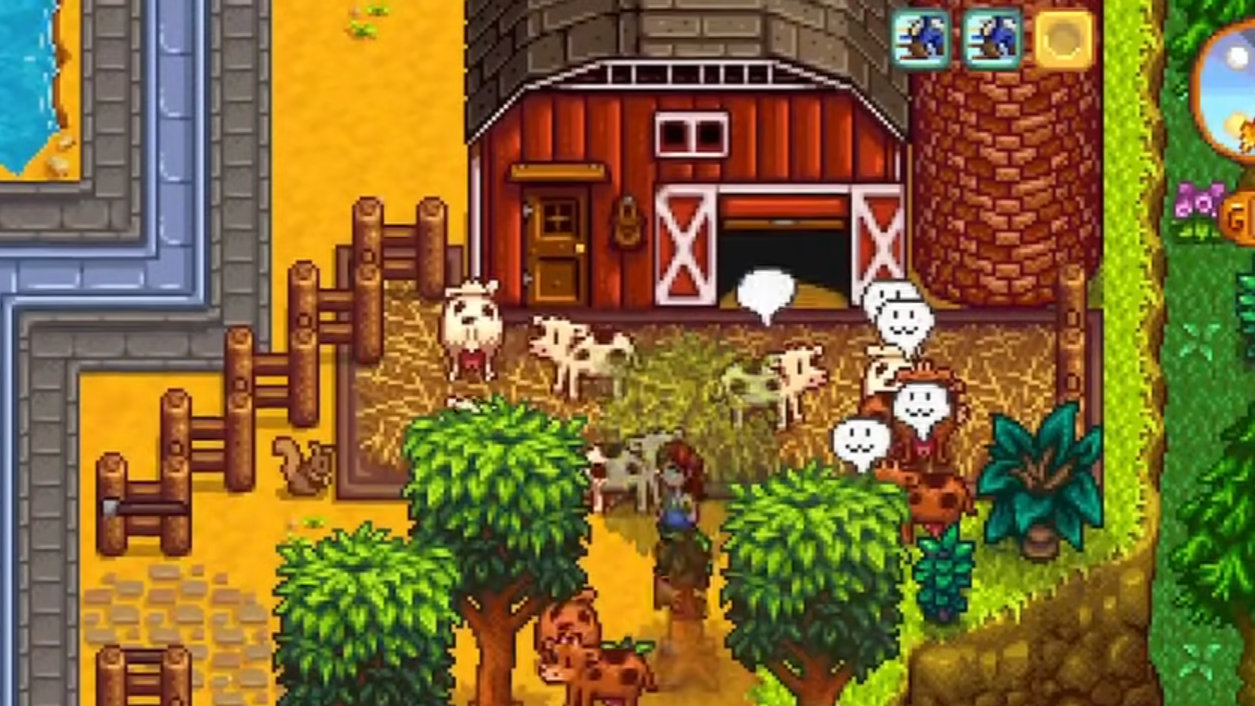
Friendship determines product quality, while mood determines whether an animal produces anything at all that day. Both are crucial for maximizing income.
Feeding Mechanics
Animals eat one daily portion of grass or hay:
- Coop animals: 2 tufts of grass
- Barn animals: 4 tufts of grass
If grass is unavailable, they eat hay from the feeding bench. Deluxe barns and coops include an automatic feeder.
Hay Storage Trick
To store unlimited hay:
- Fill your silo completely.
- Remove hay from the feeding bench.
- Store it in a chest.
This empties the silo, letting you continue cutting grass.
Friendship Gains & Losses
Friendship ranges from 0–1000. Gains:
- Petting: +15
- Milking/Shearing: +5
- Eating grass: +8
Losses:
- Not fed: –20
- Left outside overnight: –20
- Not petted: –5 to –10 (less at higher friendship)
Mood (Happiness)
Mood affects production quality. Mood ranges from 0–255 and can be interpreted via dialogue:
- “Looks really happy!” → 200–255 mood
- “Looks fine.” → 30–199 mood
- “Looks sad.” → 0–29 mood
Animals lose mood if left out in rain, out past 7pm, or sleeping outside.
Housing & Enclosures
Animals return to their building around 6pm. Closing the barn/coop door prevents them from leaving early in the morning before you can pet them. Animals left outdoors overnight become grumpy the next day.
Wild Animal Attack: If trapped outside with doors closed, an animal may disappear overnight due to a wild attack event.
Tea Saplings make excellent permanent fences that never decay.
Professions (Level 5 & 10)
At Farming Level 5:
- Rancher: +20% animal product value
- Tiller: Crop-focused (not ideal for animal farms)
At Farming Level 10 (Rancher path):
- Coopmaster: Faster coop animal production, faster incubation
- Shepherd: Sheep produce wool faster
All Coop Animals
Chickens
Chickens mature in 3 days and produce eggs daily. Large eggs appear at high friendship and mood. White, brown, and blue chickens behave identically.
Ducks
Ducks produce eggs or duck feathers every other day. Duck feathers are highly profitable and drop more frequently when mood, luck, and friendship are high.
Rabbits
Rabbits produce wool every 4 days and occasionally drop rabbit’s feet. Both mood and daily luck influence rabbit’s foot chances.
Dinosaurs
Dinosaurs hatch from dinosaur eggs placed in incubators. They lay a dinosaur egg every 7 days. Dino Mayo is one of the most valuable mayonnaise products in the game.

All Barn Animals
Cows
Cows produce milk daily. With enough friendship and mood, they produce Large Milk. Turning milk into cheese (and aging it) dramatically increases its value.
Goats
Goats produce milk every 2 days. Large Goat Milk sells especially well. Goat cheese is strong for profit but heals the same as regular cheese.
Sheep
Sheep regrow wool every 3 days, every 2 days at high friendship, and daily if you chose the Shepherd profession. Very profitable in the late game.
Pigs
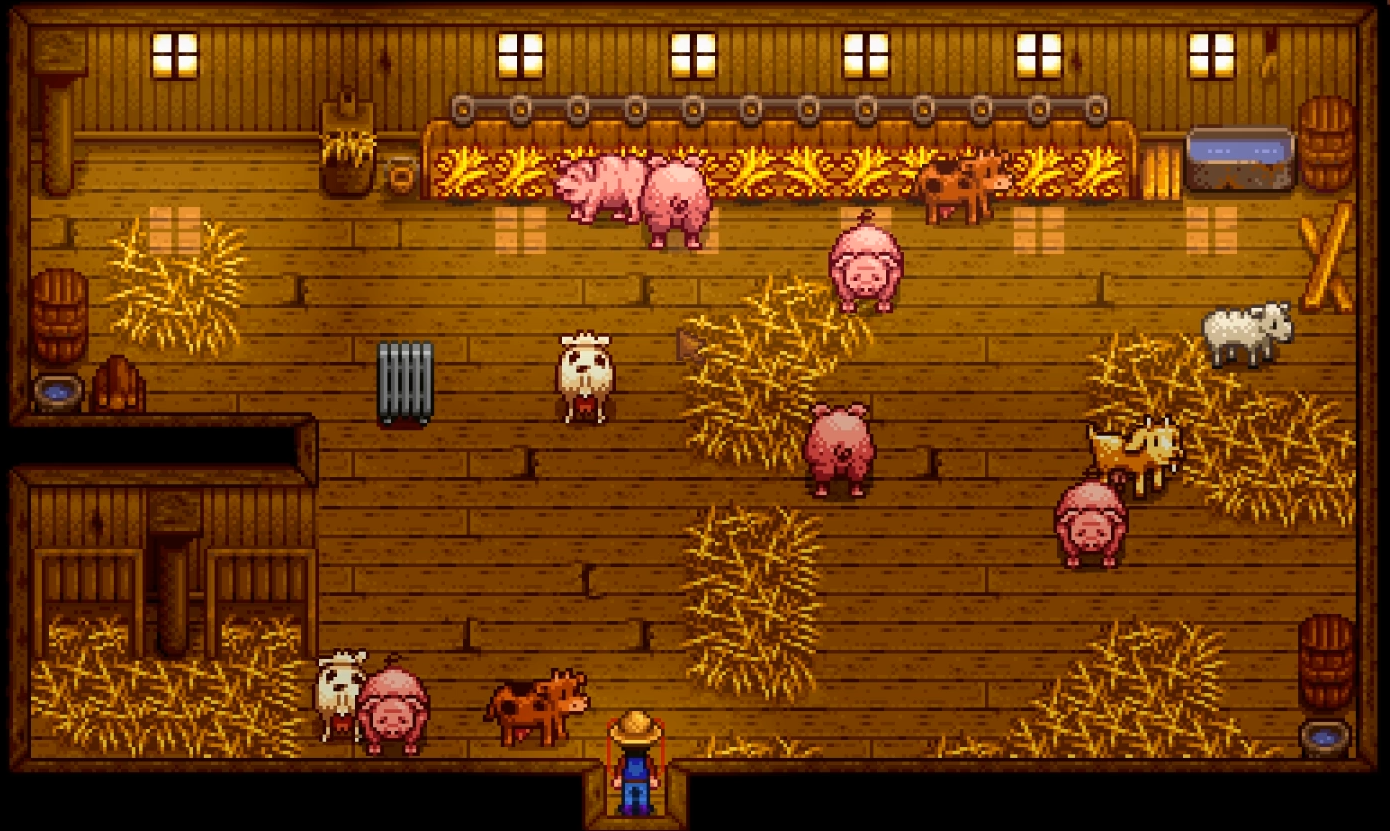
Pigs produce truffles when outdoors in non-rainy seasons (not Winter). Foraging perks like Gatherer and Botanist dramatically increase truffle value and rarity.
Ostriches
Ostriches lay an egg every 7 days. Each ostrich egg can be processed into 10 jars of mayonnaise, making them extremely profitable for artisan strategies.
Horses
The stable unlocks your horse, granting a 30% movement speed increase. Horses return home automatically and can wear hats. They can also interact with gates, buildings, shipping bins, and ponds while mounted.

Marnie: Animal Keeper & Shop
Marnie sells essential tools and items:
- Animals
- Hay
- Heaters
- Shears & Milk Pail
- Auto-Grabbers
- Auto-Petters
She frequently leaves her counter on Mondays, Tuesdays, and during special weather—plan ahead.
Auto-Petter
Automatically pets all animals daily and stacks with manual petting for faster friendship.
Auto-Grabber
Collects milk, wool, and eggs automatically. Strongest when placed in barns.
Pets (Cats, Dogs, Turtles)
You can adopt a pet early in your first Spring once earning 1,000g. Pets gain friendship by being petted daily and having their water bowl filled. Max friendship animals may bring random daily gifts.
Additional pets (cats, dogs, turtles) can be purchased later if you want multiples on your farm.
Wildlife
Stardew Valley is filled with critters like squirrels, owls, butterflies, frogs, fireflies, seagulls, and parrots. These creatures can’t be interacted with but make the world feel more alive.
Final Thoughts
Animals bring huge long-term value to your Stardew Valley farm through artisan goods, truffles, cheese, and more. Learning how to manage happiness, friendship, feeding, and building upgrades will help you build a highly profitable and efficient ranch.
Be sure to check out our Stardew Valley Farming Guide for complementary strategies.