
Short version: Plant Cranberries for consistent high profit, use Pumpkins for big single-harvest value (and giant crops), and grow Grapes on trellises for steady returns. Below: a compact guide so you can pick, plant, and profit fast.
Why choose the right fall crop?
Fall is great because it mixes high-value single-harvest crops (Pumpkins) with regrowing multi-harvest options (Cranberries, Grapes). Choosing the right mix depends on:
- How much time you want to spend watering/harvesting daily.
- Whether you want steady income (regrow crops) or occasional large payouts (single-harvest crops).
- Seed availability (Pierre, Joja, Oasis — some crops unlock later or are region-locked).
Top Fall Crop Picks (Fast Summary)
Below are the easiest, most profitable Fall crops ranked by real in-game value, daily profit, regrowth efficiency, and overall usefulness. All numbers are based on standard sell prices, base-quality harvests, and typical regrowth cycles without fertilizer boosts.
1. Cranberries — Best Overall Profit Generator
Why they’re great: After a 7-day initial growth period, Cranberries produce two berries per harvest and keep regrowing every 5 days. With multiple harvests per season and double-yield by default, they offer one of the highest gold-per-day averages in Fall.
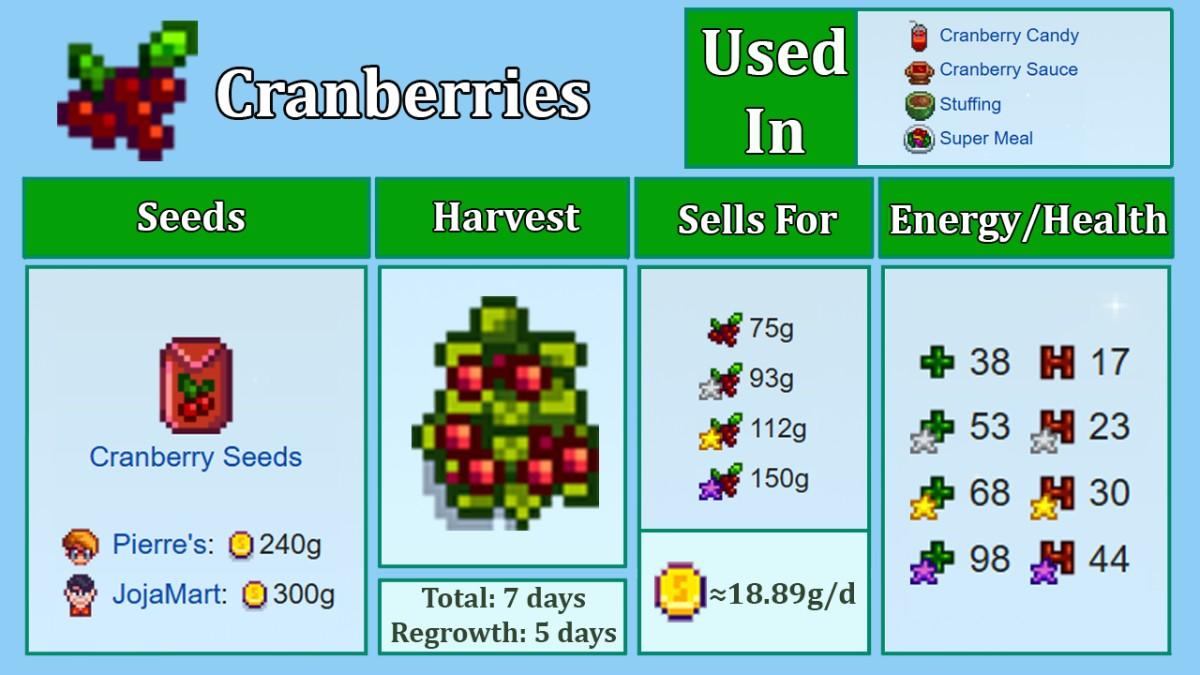
Profit snapshot: On average, a full Fall season yields several harvests, translating to some of the best return on investment for any regrow crop in the game.
Gameplay advantages: Low upkeep, compact layout, and strong compatibility with Preserves Jars (Cranberry Jelly) and Kegs (Cranberry Wine), letting you scale income well into late game.
Play tip: Plant a large patch early on day 1 of Fall to maximize production cycles. If you’re using sprinklers, Cranberries are perfect for automated high-profit fields.
2. Pumpkins — Highest Single-Harvest Value & Giant Crop Chance
Why they’re great: Pumpkins take longer to grow (13 days) but compensate with a high base sell price. They are also one of only a few crops capable of forming Giant Crops when planted in a 3×3 block.
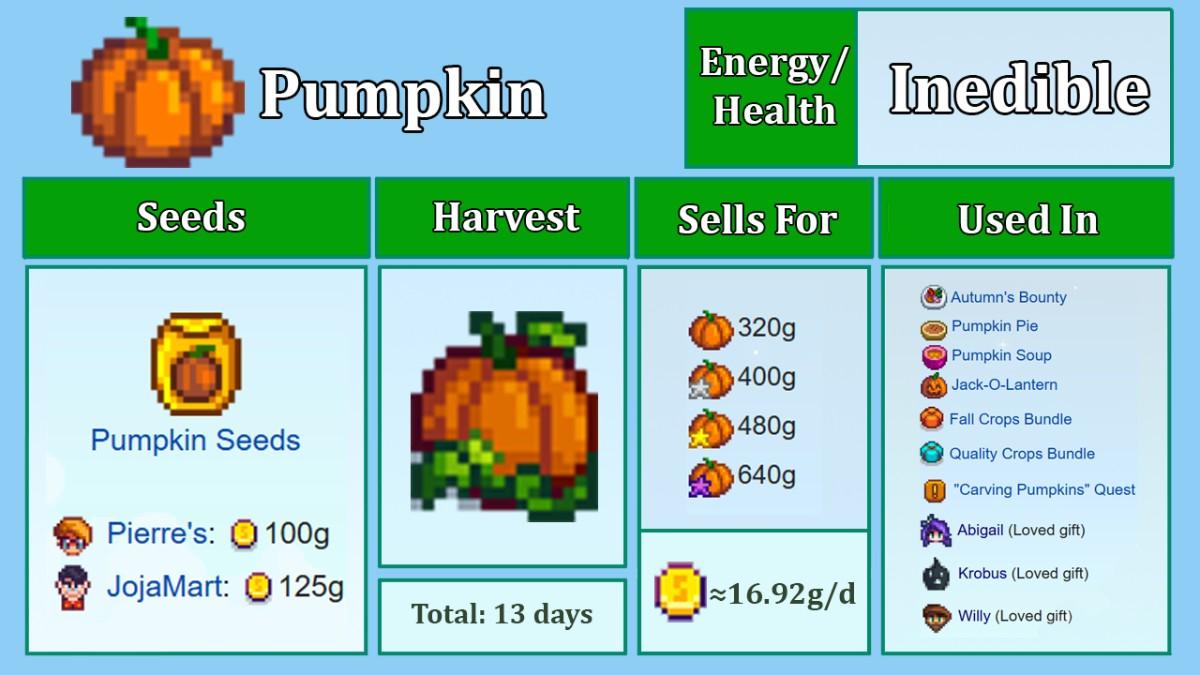
Profit snapshot: Their daily profit rate is excellent for a single-harvest crop, especially when boosted with fertilizer for gold or iridium quality.
Gameplay advantages: Used in profitable artisan recipes and highly appreciated as gifts. Giant Pumpkins can generate 15–21 items at once, making them a valuable mid-game income spike.
Play tip: Place a 3×3 Pumpkin block early in Fall, keep it watered daily, and do not harvest until the end of the season to increase chances of a giant version forming.
3. Grapes — Reliable Regrowing Trellis Crop
Why they’re great: Grapes mature in 10 days and regrow every 3 days afterward. Their regrowth rate is faster than most regrow crops, giving a steady stream of income during Fall.
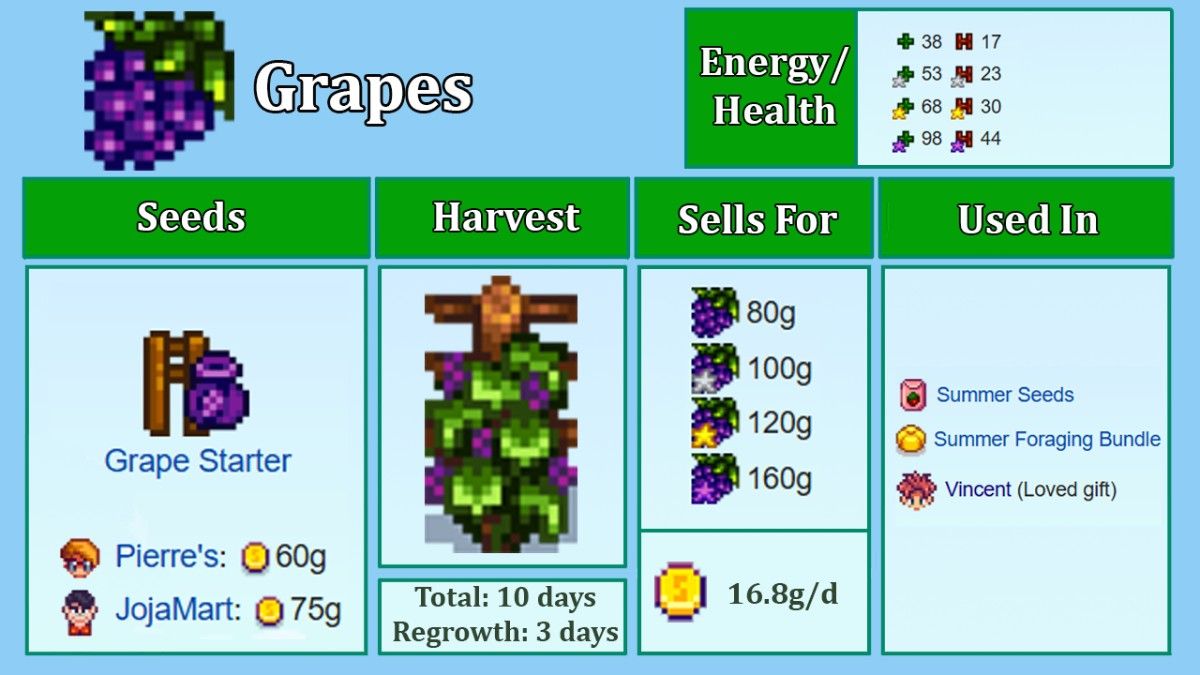
Profit snapshot: While they don’t beat Cranberries in pure profit, their fast regrowth cycle makes them a stable and efficient mid-tier option.
Gameplay advantages: Excellent for Keg processing (Grape Wine), which dramatically boosts profit if you’re using artisan gear.
Play tip: Because Grapes grow on trellises, avoid compact square planting layouts. Use long horizontal rows to prevent blocking your character’s movement.
4. Artichoke — Strong Year 2+ Vegetable With Good Profit
Why it’s great: Artichoke takes 8 days to mature and doesn’t regrow, but its sell price makes it one of the better single-harvest vegetables. Seeds also become easier to access from Year 2 onward.
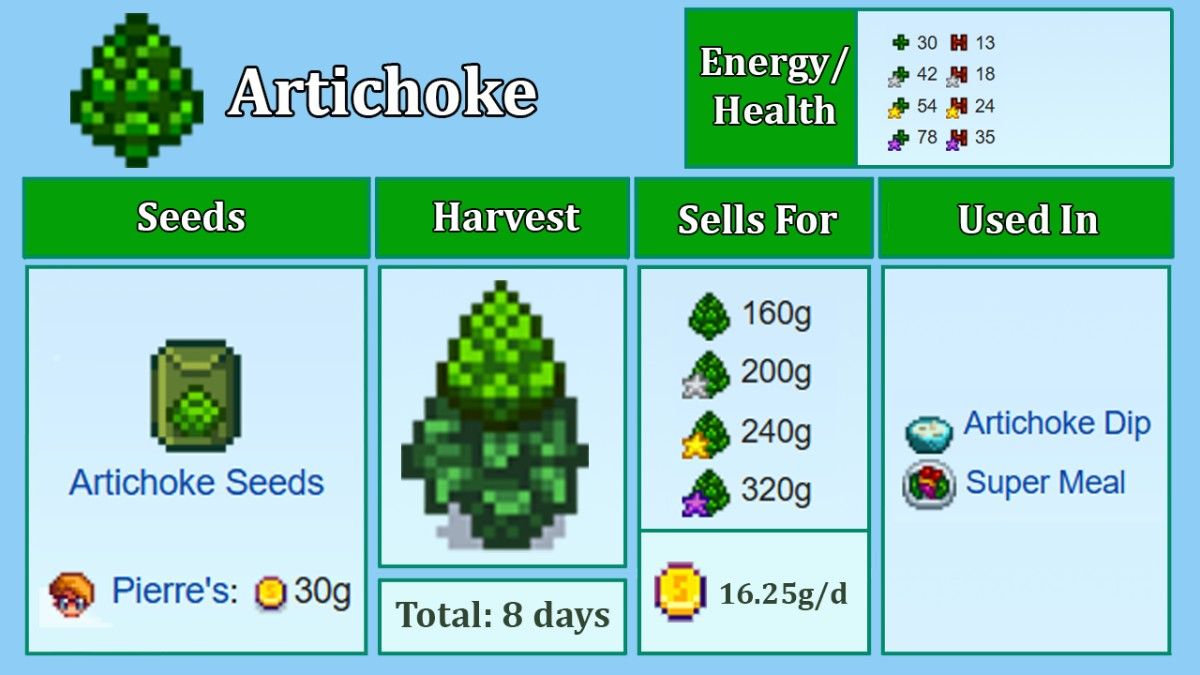
Profit snapshot: Better gold-per-day than many Year 1 crops. Very efficient if you want fast fields that don’t require regrowth uptime.
Gameplay advantages: Used in cooking (Artichoke Dip) and offers solid energy/health restoration if you keep a few for mining runs.
Play tip: Combine Artichoke fields with Pumpkin fields if you want mixed harvest cycles without constant daily farm tasks.
5. Broccoli — Consistent Returns With Regrowth
Why it’s great: Broccoli takes 8 days to mature and then regrows every 4 days, making it a dependable crop throughout Fall.
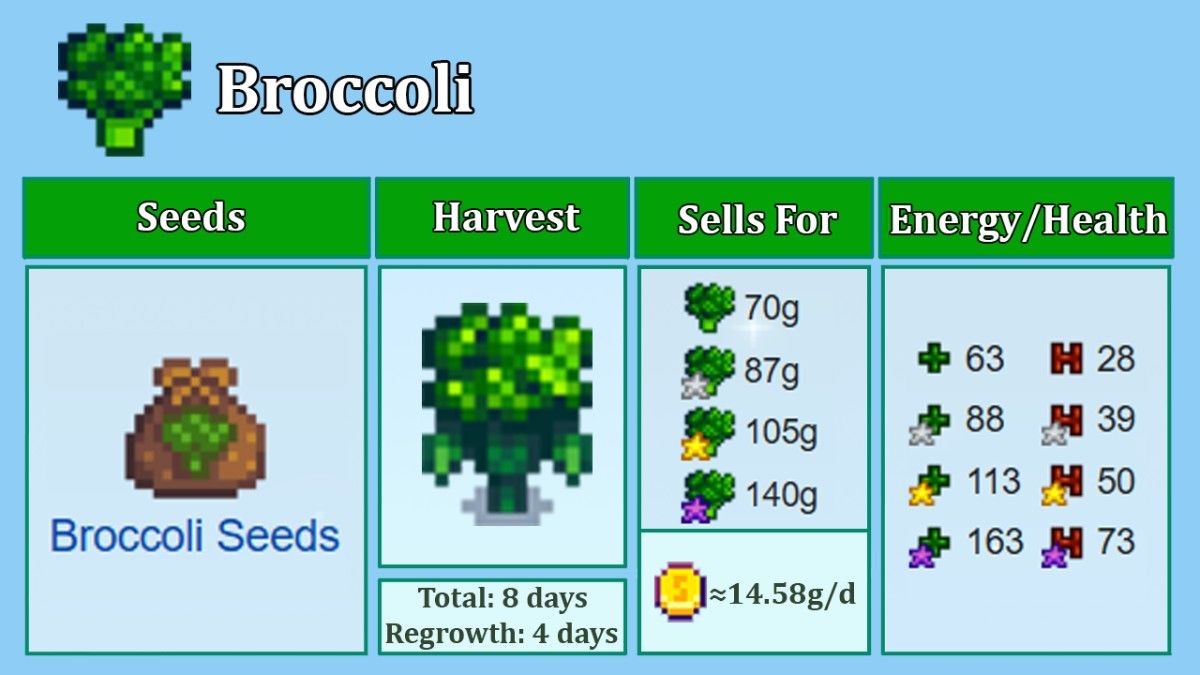
Profit snapshot: Broccoli’s per-day profit competes well with many regrow crops and offers more value than most “filler” vegetables.
Gameplay advantages: Can be harvested multiple times, and its higher-tier quality versions provide strong health/energy boosts.
Play tip: Broccoli is perfect for players who want a balance between profit and a controlled harvesting schedule—less intensive than Cranberries but more rewarding than single-harvest filler crops.
Beet, Eggplant, Yam — Useful But Not Top-Tier Profit
Why they’re decent choices: These crops aren’t the best income generators, but each has specific uses:
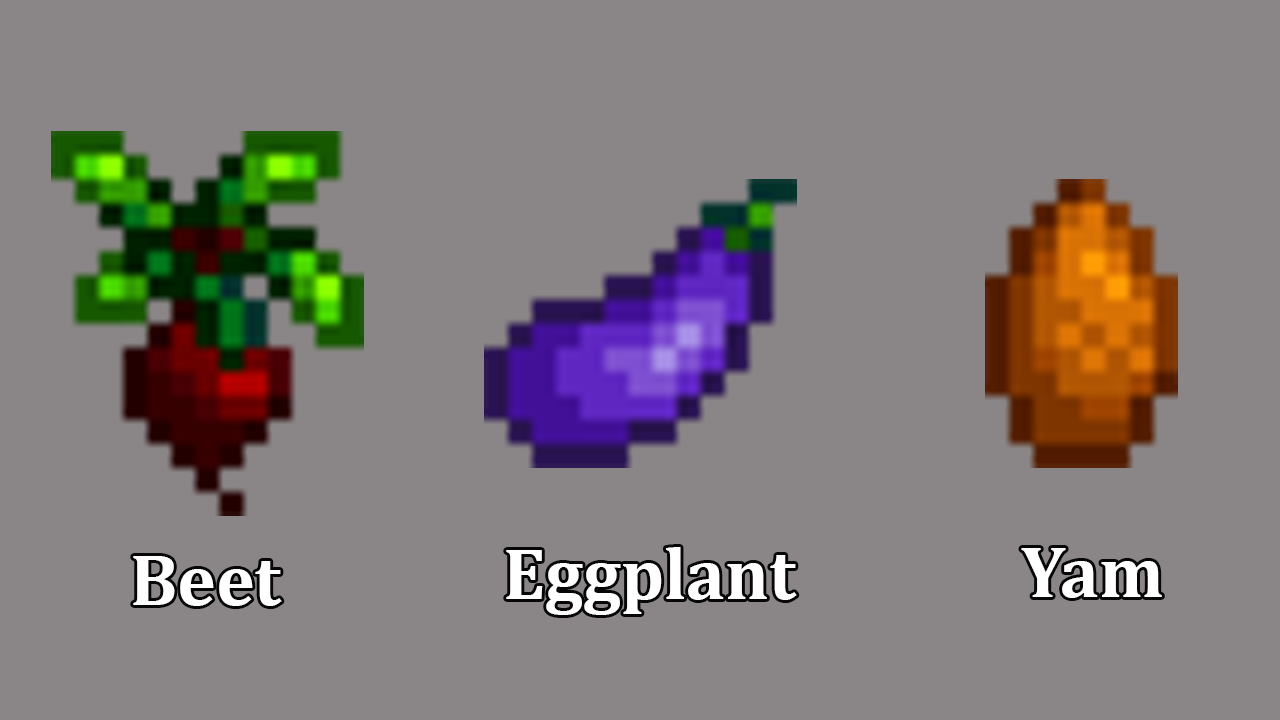
- Beet: Required for the Desert questline and used in a variety of cooking recipes.
- Eggplant: A fast-growing regrow crop that’s great for early Fall if you’re short on gold.
- Yam: Popular gift item and part of the Fall Crops Bundle, making it essential for Community Center runs.
Play tip: Use these as supplemental crops when you want variety, need to fulfill bundles, or want to prepare recipe stocks without hurting your main profit fields.
Short planting & fertilizing checklist
- Fertilizer: Use Basic Fertilizer for higher quality chance early on; Deluxe Fertilizer raises iridium-quality chances later in the game.
- Timing: Plant as early as possible in Fall to maximize harvest windows. Regrow crops like Cranberries are best planted on Day 1 of Fall.
- Watering: Water daily (or use sprinklers) — regrow crops only progress when watered each night.
- Scarecrows: Place them if you have >15 tiles planted to stop crows from stealing crops.
- Giant Crops: For Pumpkins, Melons or Cauliflower, use 3×3 planting blocks and keep all tiles watered.
Where to convert crops for extra profit
- Preserves Jars: Good for turning many vegetables into pickles/jelly — quick and low-energy.
- Kegs: Great for wines/juices if you want to maximize profit long-term (takes time but very profitable for fruits).
- Artisan route: If you already have kegs and a steady fruit supply (grapes, cranberries converted to juice/wine), artisan goods often beat raw sell prices by a large margin.
If you’re not sure which equipment makes more sense for you, see my full comparison: Stardew Valley Artisan Equipment Guide: Preserves Jars vs Kegs vs Beehouses.
Fast plans by playstyle
Casual / early Year 1
Plant a small Cranberry patch if you reach Fall with seeds; otherwise focus on a mix of Pumpkins and Eggplants for variety and gifts.
Aggressive profit / mid-game
Large Cranberry field + some 3×3 Pumpkin plots for giant crop attempts. Add kegs later to turn fruit into high-value artisan products.
Mini FAQ
Are regrowing crops always better than single-harvest?
Not always. Regrowing crops (Cranberries, Grapes) give steady income throughout the season, while single-harvest crops (like Pumpkins) can deliver bigger one-time payouts and giant crop bonuses. The best choice depends on whether you want predictable daily income or high-risk high-reward returns.
Which crop should I plant in the Greenhouse?
Any regrow crop (Cranberries or Grapes) or high-value fruit if you’re running kegs. The Greenhouse removes season limits, so pick whatever gives the highest profit or artisan value.
Liked this short guide? Read more about seasonal crop choices and layouts in my Best Crops for Every Season guide, or optimize artisan income with my Preserves Jar vs Keg breakdown.